In detailWhat is in the pack, and what is not.
A monthly set of accounts arrives weeks after anything could be done about the weeks it describes. These five procedures put the same checks on a weekly and monthly calendar, name who does each one, and say what happens when a figure is outside its limit.
Weekly blind stocktake and variance investigation (SOP 16)
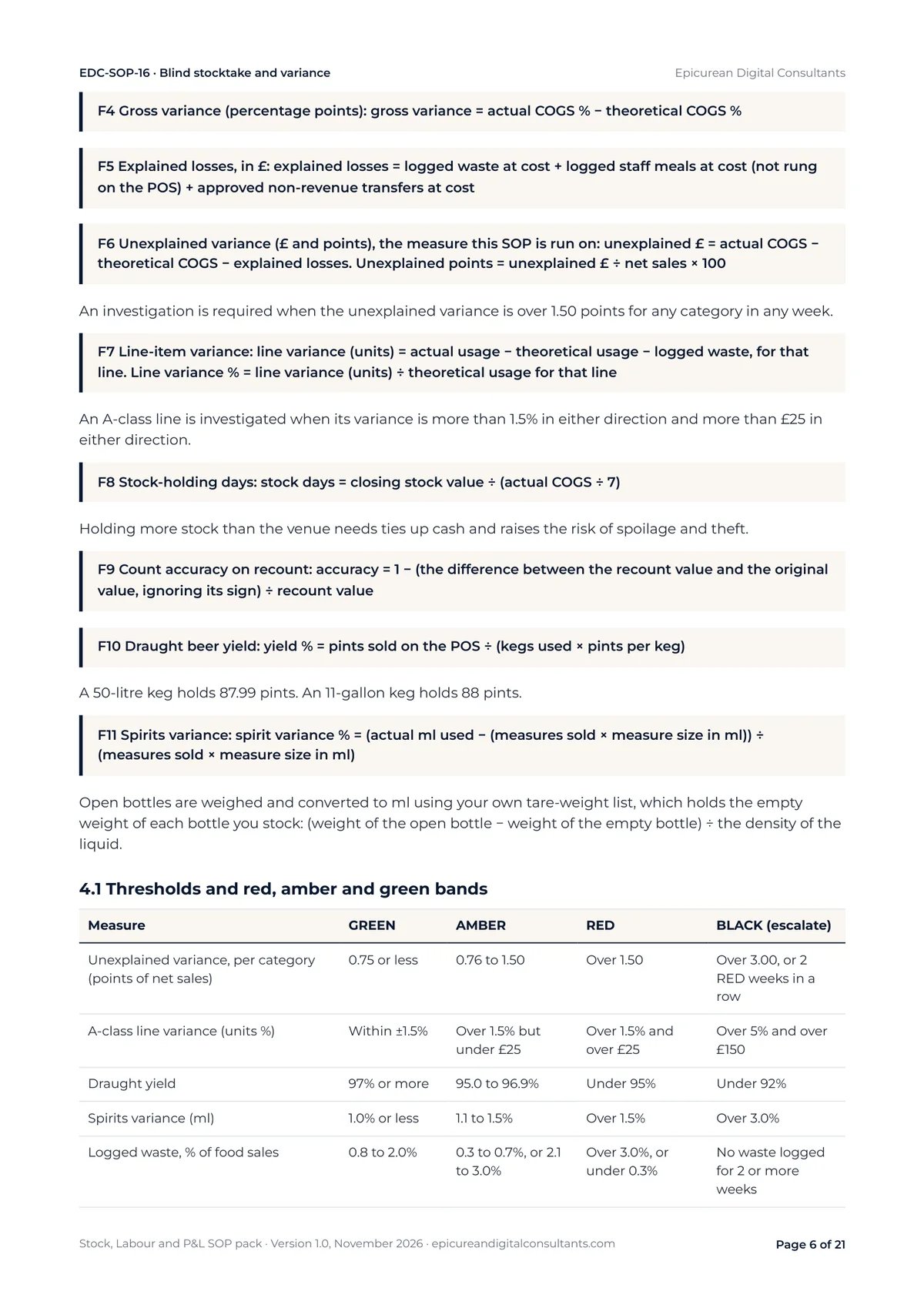
A count done without sight of the expected figures, then a reconciliation of waste, staff meals and comps. What is left is the unexplained variance. When it is over the threshold, the SOP sets out how it is investigated, in three stages, before anyone is spoken to about integrity.
Rota planning from the sales forecast and sales per labour hour (SOP 17)
A sales forecast by day and by hour, a labour budget, and a rota built to it. Each hour is costed with UK employer on-costs for the 2026 to 2027 tax year. Checkpoints during the shift, rules for an early cut, clock-in control, and the working-time, rest and under-18 checks that are run before a rota is published.
Weekly flash P&L and prime cost review (SOP 18)
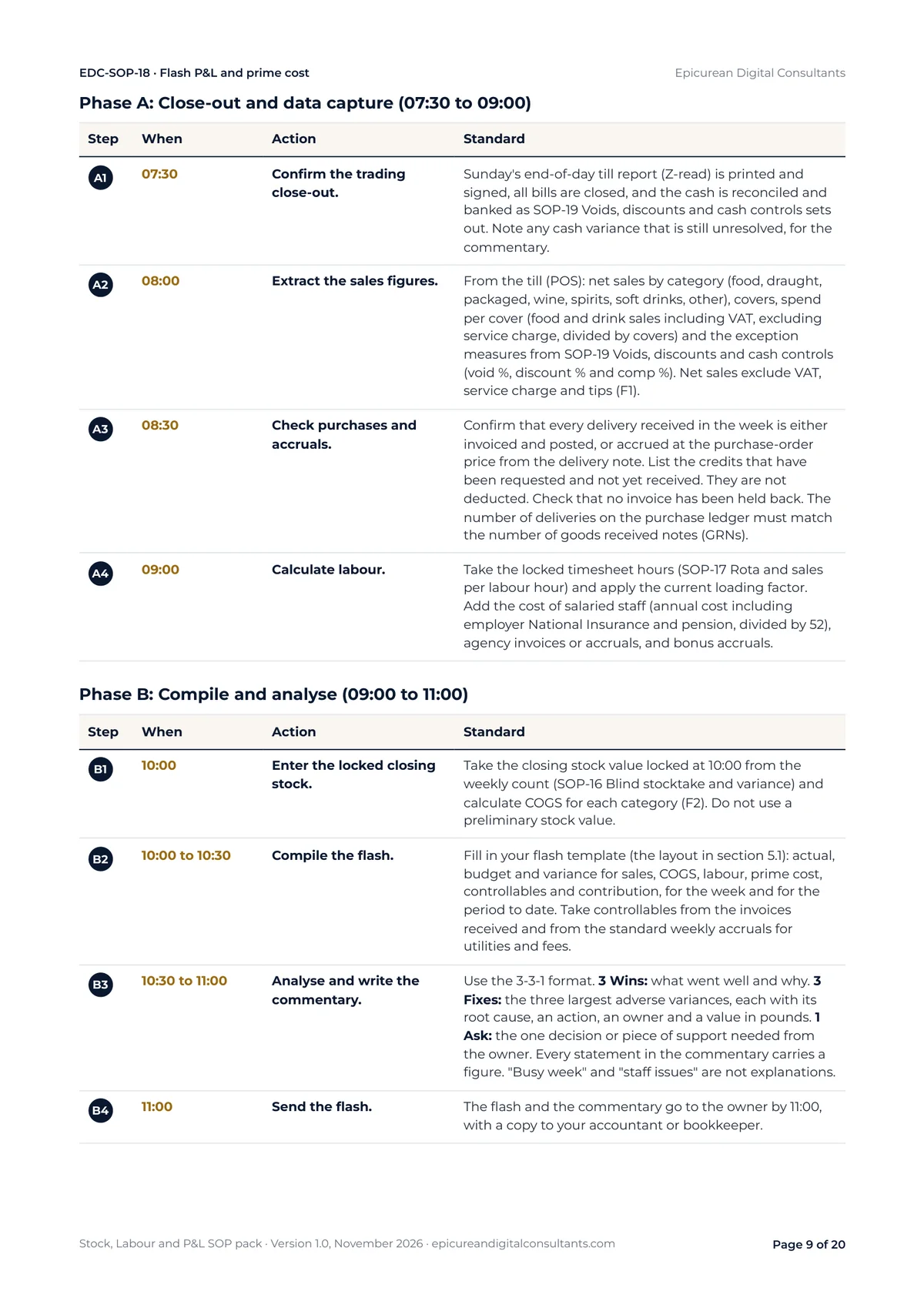
The Monday morning routine: the week’s sales, cost of goods sold and labour pulled into one page, prime cost measured against a ceiling you set, a fifteen-minute meeting with the owner, and a written correction plan in the middle of the month.
POS voids, discounts, comps and cash controls (SOP 19)
Who may authorise a void, a discount, a comp or a refund. A weekly exception report by person. Safe drops, a blind cash-up, banking, tips and service charge, gift vouchers and deposits, and how an investigation is run fairly when a drawer does not balance.
Monthly menu engineering and price review (SOP 20)
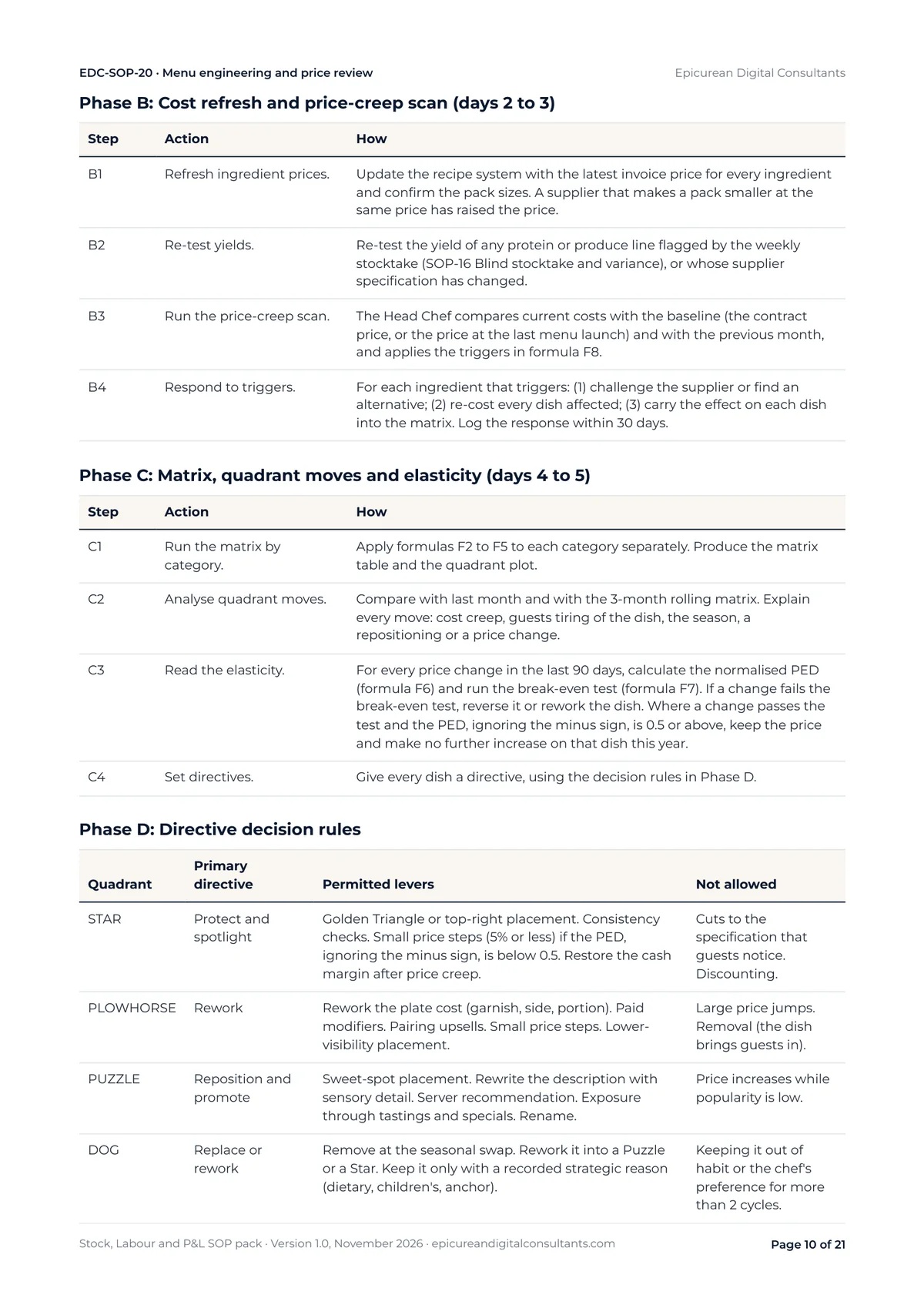
A monthly cycle: what sold, plate costs refreshed, supplier prices scanned for creep, every dish placed by popularity and margin, the result of a price test read properly, and a countdown plan for the seasonal menu swap. It states the rule on showing the total price on a menu, as read in the 2024 consumer law.
How each one is laid out
Purpose and scope, roles, definitions, the formulas and thresholds, a worked example, numbered steps by phase, a calendar, a table of red flags with the check to run for each, escalation, records, training, then a sign-off sheet to print. The last page lists the sources for every legal and tax point and the date each was read.
The worked examples
Each uses the same made-up 80-seat restaurant and shows the arithmetic. Each SOP states its own assumptions: the stock count, the rota and the flash P&L are separate examples, and their figures are not one set of accounts. None is a forecast for your venue, and the pack says so.
The pay and tax figures
Minimum wage, employer National Insurance, pension and holiday figures are for the 2026 to 2027 tax year, read at GOV.UK and The Pensions Regulator, and printed with their date. The loaded labour cost is a figure for managing the week. It is not a payroll calculation.
What it is not
Not payroll, bookkeeping or statutory accounts. Not legal, tax, accounting or employment advice. The employment statutes were read for England, Wales and Scotland; Northern Ireland was not read.
Who it is for
The owner or general manager of an independent UK restaurant, café or bar.
Who it is not for
Groups with a finance team and their own reporting pack. Anyone who wants payroll calculated.